UNDERSTANDING THE VALUE OF A MASTERPIECE
Introduction
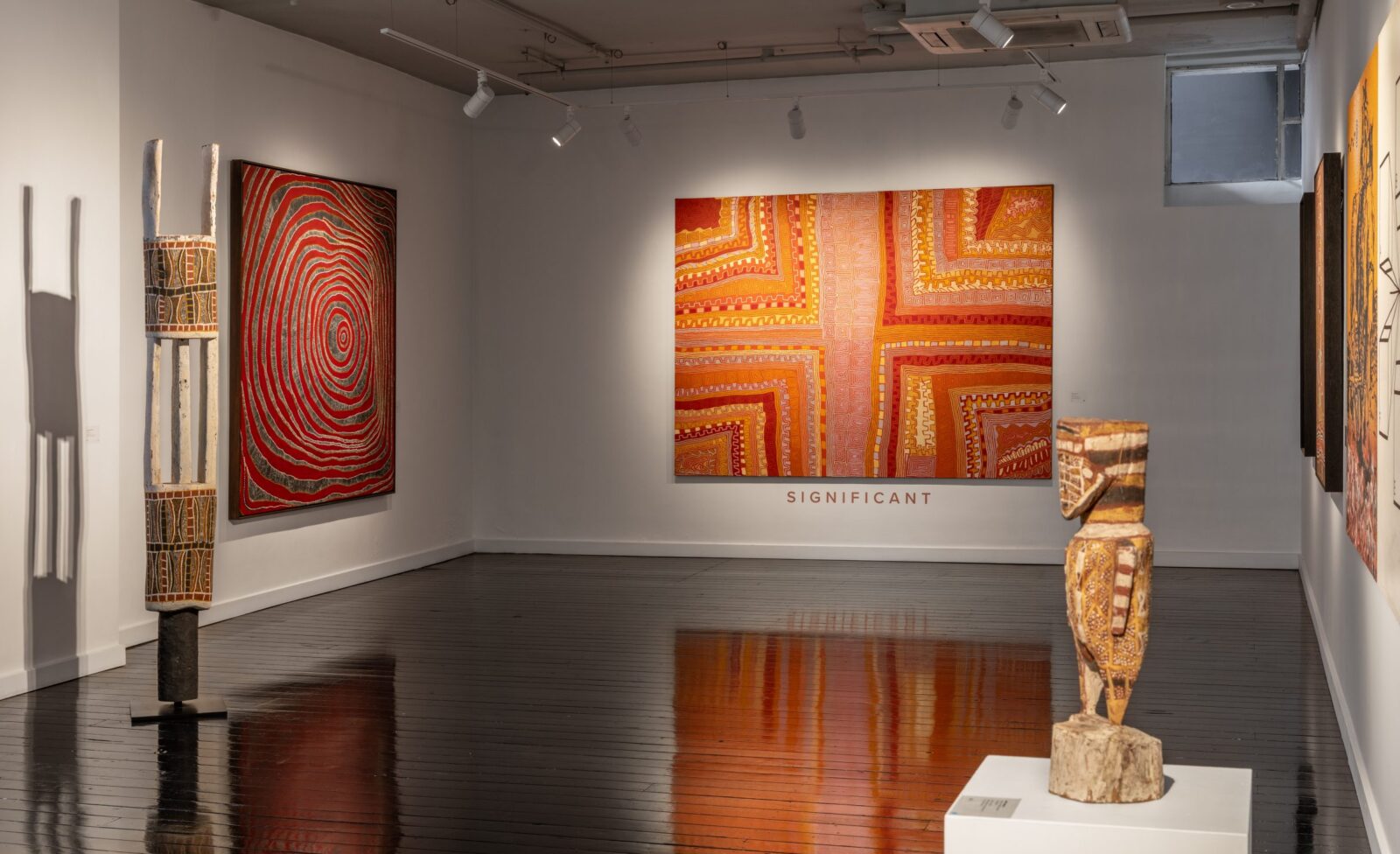
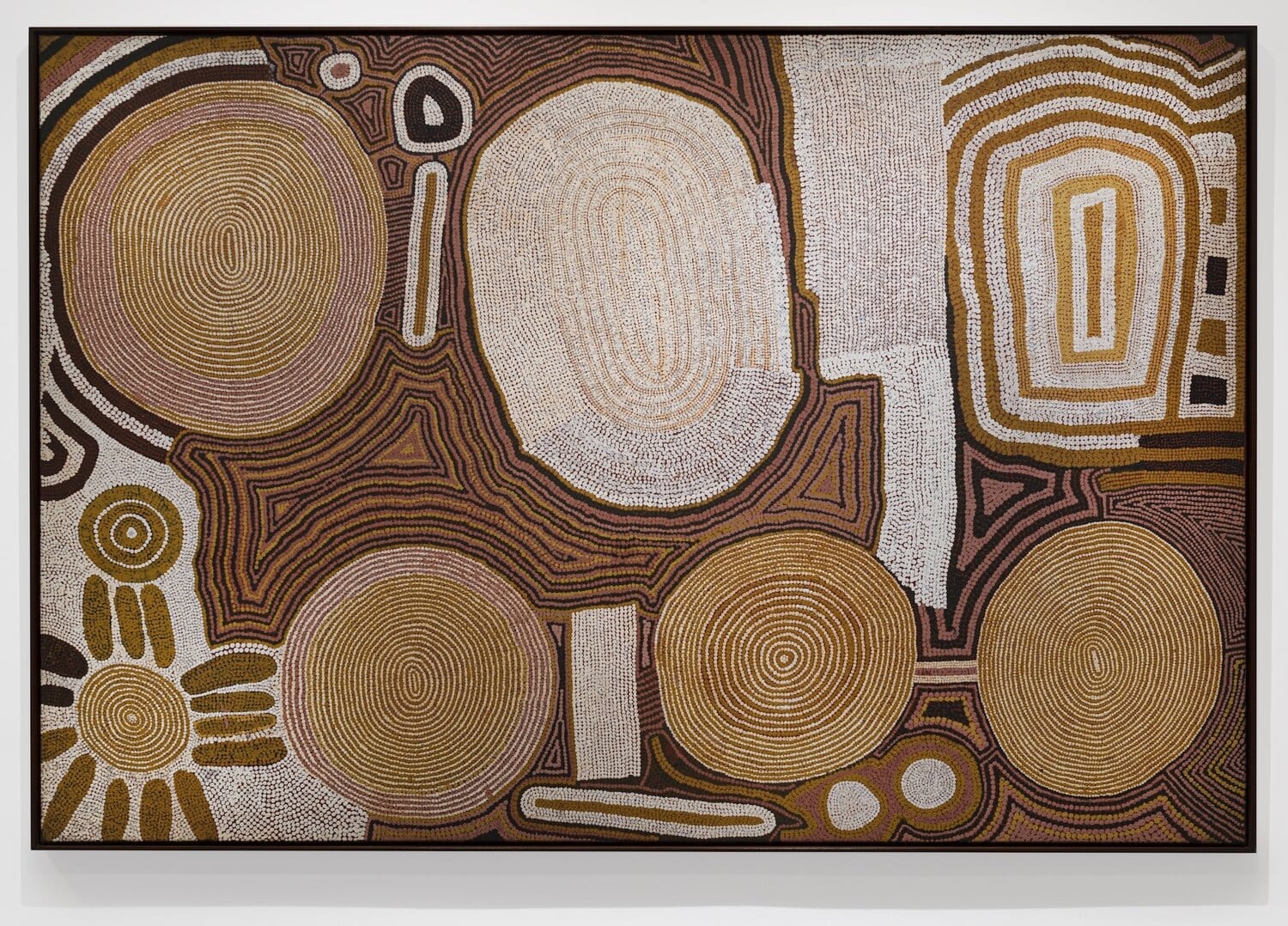
This year we were entrusted by esteemed collectors John and Barbara Wilkerson in the sale of Tommy Lowry Tjapaltjarri’s Two Men Dreaming at Kuluntjarranya 1984.
As Significant concludes we reflect on the process of determining the fair market value of this masterpiece.
TOMMY LOWRY TJAPALTJARRI
Two Men Dreaming at Kuluntjarranya 1984
synthetic polymer paint on canvas
121.5 x 183 cm
Offered by D’Lan Davidson, Significant, Melbourne, 17 June – 31 July 2021
AU $2,000,000
Background
When a singular work was presented to me this year to return home – the question was raised – what’s it worth?
Before we delve deeper into the processes that determined the present market valuation, one must first appreciate the meaning of value in the context of the art world and broader community.
When valuing an artwork, value is not just determined by traditional metrics: price precedents, potential appreciation, opportunity cost (of capital tied up in an illiquid asset), supply v. demand. Rather, it needs to consider a range of other ‘intangible’ factors including the importance of the work in the developing our understanding and appreciation of an art movement, the emotion it conjures and imparts, and most importantly the overall sense of regard.
Tommy Lowry’s Two Men Dreaming at Kuluntjarranya 1984 is a formidable work that deservedly sits in the top echelon of price. As a singular work it presents a fascinating case study in arriving at the value of a masterwork.
SIDNEY ROBERT NOLAN
First-Class Marksman 1946
Ripolin enamel on composition board
91 x 121 cm
Menzies, Australian & International Fine Art, Sydney, 25 March 2010
SOLD: AU $5,400,000
Process of valuing Tommy Lowry’s Two Men Dreaming
To help explain the processes behind the formation of commercial price, I am going to table out the important opinions that assessed the painting when it was first deemed too significant to Australia to be exported permanently.
We also consider the work in the context of all Australian Art – not just Australian Indigenous Art and we need to appreciate the picture’s aesthetics, and then consider current market sentiment and demand for exceptional pictures, of which we are uniquely positioned to understand.
Factors Influencing Value
Firstly, let’s take a look at the authoritative opinions which were widely publicised in a recent article in the Financial Review, which I rely heavily on when forming basis aligned with my own personal judgement:
John Kean, who along with curators Hetti Perkins and Vivien Johnson assessed the painting and concluded it should not be given a permanent export permit, describes it as “prescient, a work of visual power and compelling material presence.”
“No single work created in Australia’s arid heartlands has attracted such a high degree of scrutiny at both artistic and legislative levels, as has Kuluntjarranya,” writes Kean, in the Significant exhibition catalogue.
“If there was a case to be made for the very best work by Indigenous artists to be retained in Australia, this was the painting on which that position must be made.”
RUSSELL DRYSDALE
Grandma’s Sunday Walk 1972
oil on canvas
75 x 126 cm
Mossgreen Auctions, Adelaide, 25 June 2017
SOLD: AU $2,976,000
When referring to the offered painting’s aesthetics: Clearly the current work is stunning on many levels; a complex and powerful composition that embodies what all Australian Indigenous Art is best known for. It resonates with authority the ancient cultural stories and lore; densely composed motifs hold a force connected to country, of which these haptic qualities are unparalleled in non-Indigenous spheres.
When friend and respected colleague Scott Livesey revisited the work recently at our offices, he expressed similar feelings – ‘if it [Kuluntjarranya] is not the pinnacle of Australian Indigenous Art – it is certainly a top 5 picture’ . That well-informed statement reaffirms what we know.
Final Considerations
Finally, we must also look at the reinvestment by the present owners back into the work through travelling and exhibiting the work in the high-profile exhibitions around the United States – and the value generated from that further investment – not just the price paid [AU $576,000] in 2007.
Value / regard also plays a pivotal role in generating ‘amour propre’ – self-worth.
An inherent challenge Indigenous Art Centres face presently is that there is a prevailing sentiment that value and price are mutually exclusive. Some in the industry – and the buying public – use price as a rationale for undervaluing artworks. The old auction sentiment “price it low and watch it go” seems to have crept into the primary market and is at risk of lowering productivity (which we have seen) and in turn may result in a lack of quality (which we don’t want to see).
Arriving at Fair Market Value
So let’s revert back to the original question – what’s Tommy Lowry’s most famous painting actually worth? The definition of market value, would suggest that what a willing buyer and willing seller are actually willing to exchange an item for – is what its worth.
I have firmly determined the value of $2 million for the current masterpiece. This takes into account the intrinsic value the work presents to Australia’s cultural heritage – a fact determined by the Cultural Review board. It considers the price paid by the current owners, and the significant investment they have made in touring the work abroad and the subsequent critical and public recognition this earned the painting as one of the finest examples of Australian Indigenous Art. It also references the prices paid for other Australian art masterpieces – be they Indigenous or non-Indigenous.
The current work definitely holds its own when contextualised against Sidney Nolan, Clifford Possum or Russell Drysdale masterworks.
Finally, it also has been tested by collectors: three of my most significant overseas clients asked the question of price. One of those overseas clients committing to buy it for that price, if the work would be granted a permanent export licence.
Thus the question remains, how much do we Australians, at this point in our own cultural reckoning, value a masterpiece that is proven to grow understanding and appreciation of our Indigenous heritage? It is my belief that this intrinsic value should greatly exceed any monetary setting… this opportunity only presents itself once.
D’Lan.