Makinti Napanangka X Naata Nungurrayi
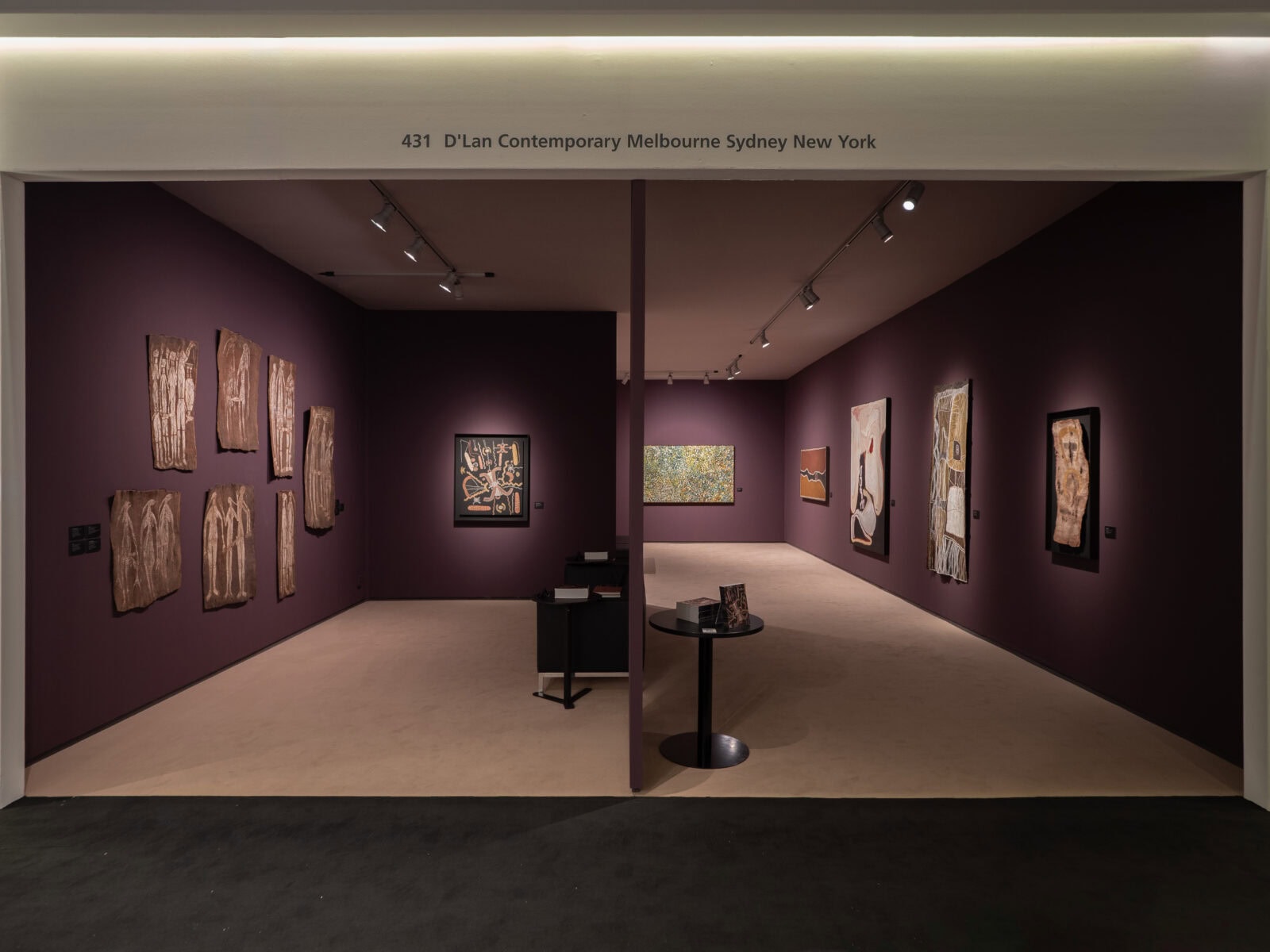
D’Lan Contemporary returns to Frieze Masters, London for its third consecutive year this year, with an exhibition that will highlight the work of two pioneering artists, Makinti Napanangka (c. 1920 – 2011) and Naata Nungurrayi (c. 1932 – 2021).
These two Pintupi women from the Western Desert began painting in 1996, the same year that Emily Kam Kngwarray—whose success inspired so many women in remote Aboriginal communities to begin painting—passed away. Through their diverse perspectives, they continued to expand the field of women’s desert art and together they transformed the visual language of the Australian desert landscape.
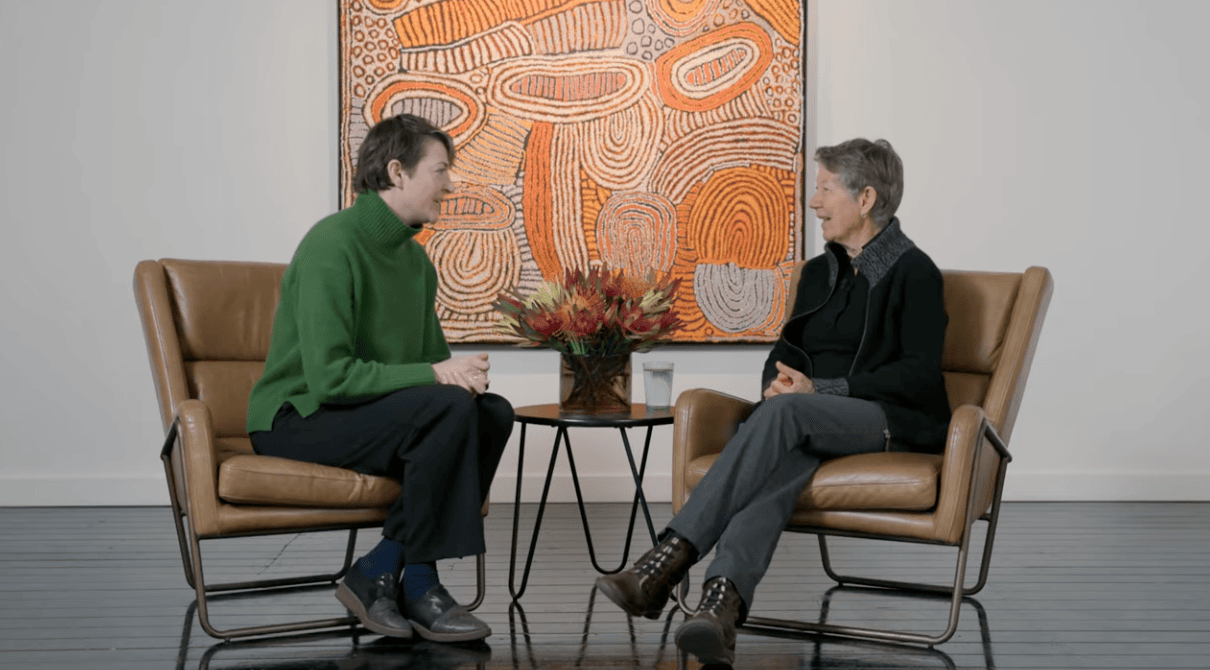
We hope you enjoy this video, with Head of Research, Vanessa Merlino, and an excerpt of her essay from the exhibition catalogue, below:
‘To quote the Tate Modern’s Adjunct Curator of Indigenous Art, Yorta Yorta woman Kimberley Moulton, ‘To fully understand Indigenous art, we must first understand the concept of Country in an Indigenous world-view.’1 Unlike ‘the’ country, which refers to the vast, singular nation of the Australian continent, Country, as a proper noun, comprises myriad time-expanding and multi-faceted identities of place within the landscapes of its interior.
Since the early 1970s, when the nascent painting movement was taking shape at Papunya, it has evolved from the didactic – as manifested in the early boards of Papunya – to revealing the sensual or the ‘feeling’ landscape. When the Western Desert art movement gained international attention in the late twentieth century, it was often seen as Australia’s unexpected contribution to global modernism. The striking dot-and-circle symbols, first created at the settlement of Papunya in the early 1970s, seemed to resonate with the language of abstraction already known to European and American audiences. Rooted in formal experiments with iconography and sacred imagery related to the Dreaming, for the first two decades the Western Desert art movement was predominantly a male-dominated innovation. This distinct gender divide eventually collapsed with a new surge of painterly expression in Western Desert art.
A number of women artists gained ascendancy, transforming the masculine emphasis on dots and circles by offering a vibrant female-centric experience of desert life, one that was performative and sentient, and was grounded in the highest cultural authority of the senior women. The Australian art world was at once captivated by what seemed to be the contrasting approaches of the women artists to depicting the world: brushstrokes that celebrated ceremony, narratives of vegetation and seasons, and various tactile techniques that were both engaging and fundamentally different from those of their male counterparts.
The rise of women painters in the 1990s marked the movement’s second major breakthrough – with Kngwarray, from her Country further to the east, gaining the highest acclaim. By the time Kngwarray passed away in 1996, she was already regarded as Australia’s greatest contemporary artist; that same year, Makinti Napanangka and Naata Nungurrayi were entering the contemporary art scene from their small desert community of Walungurru, or Kintore, in the Northern Territory.
Makinti Napanangka’s deep cultural knowledge drove her artistic hand. Her leadership in women’s performance influenced her mark-making, which depicts the travels and dances of ancestral women across her traditional lands. In such paintings, Country reveals itself as a sentient being, yet it is also as intimate as one’s kin. One can be homesick for it, cry for it, care for it and be raised by it. The musicality of Naata Nungurrayi’s paintings shows that narrative and ceremonial songs will permanently reside within the body, transforming the canvas so that it becomes the ground’s surface; her brush sings Country into painterly existence.’ – Vanessa Merlino
1. Kimberley Moulton, ‘Returning to Country that Names Us’, in Emily Kam Kngwarray, Tate Publishing, London, 2025, p. 218.
Frieze Masters 2025 | Booth B10 15-19 October, The Regent’s Park, London
Video by @gd.content